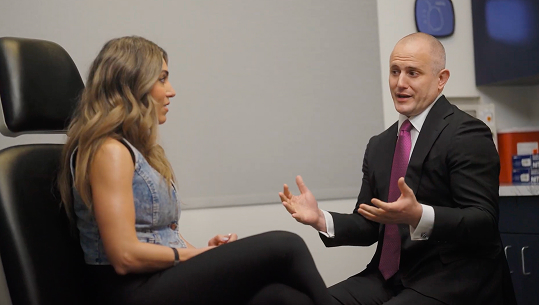
A plastic surgery consultation is more than just a first appointment. It’s the starting point for a safe, thoughtful, and personalized treatment plan. During this visit, a board-certified plastic surgeon evaluates your anatomy, listens to your goals, reviews your options, and explains what is realistic for your body.
Every patient is different. Skin quality, muscle tone, volume loss, aging patterns, pregnancy history, and personal goals all affect what will work best. That is why the right plan is rarely a copy of a friend’s surgery or a look you saw online. It should be tailored to what you want, what you need, and what can be done safely and effectively.
As Dr. Geo Tabbal, a board-certified plastic surgeon serving Frisco, Plano, and the greater Dallas–Fort Worth area, explains, the visit should be centered on the patient: “When patients come to my office, they’re not just simply picking a technician who can perform the surgery they think they need. Rather, they are asking me to assess them for what I think might benefit them the most. While their anatomy is the foundation for what is possible, their specific goals are just as important. And to know their goals, I need to listen and understand them as a person.” This individualized attention is the foundation of a tailored plan, not a one-size-fits-all package.
In this article, Dr. Tabbal explains why the consultation matters, what your surgeon is evaluating, and how this first meeting helps create results that fit your anatomy, goals, lifestyle, and safety needs.
Why Does the Plastic Surgery Consultation Matter So Much?
Patients often arrive with a specific request; maybe it’s a breast enhancement, a tummy tuck, a facelift, or even Botox. A skilled surgeon uses the consultation to educate, examine, and, when appropriate, redirect. Dr. Tabbal shares, “The [patient] may not be a good candidate for surgery. Often the surgery that will benefit them the most will not be the one that they’re interested in initially.”
That honesty is a critical part of high-quality care. He adds, “Sometimes people ask me, ‘What’s the best surgery you’ve ever performed?’ And I laugh, but I honestly tell them, ‘It’s usually the surgery I say no to.'” A thoughtful “no”—or a different recommendation—can protect your health, your results, and your investment. It’s important for would-be patients to understand that when they see “bad plastic surgery” out in the world and online, that is almost always because of a surgeon who said “yes” when they should have said “no.”
Breast Consultation: Is Augmentation Always the Answer?
No, breast augmentation is not always the right procedure. A breast consultation is a good example of why an in-person exam matters. Someone searching for a breast augmentation may assume implants alone will restore a youthful shape. However, after pregnancy, weight change, or aging, the real issue may be sagging (ptosis), loss of upper-pole fullness, or a combination of concerns. If the nipple sits below the breast crease, a breast lift may be recommended. If volume is the main concern and the overall position of the breast is okay, implants or fat grafting may be enough.
Body Contouring Consultation: What Does the Surgeon Actually Evaluate?
Body contouring procedures are also equally nuanced. For example, a patient who requests liposuction may have loose skin or separated abdominal muscles (diastasis recti) after pregnancy. Liposuction can remove stubborn fat, but it does not significantly tighten loose skin or repair muscle separation. In those cases, a tummy tuck, often combined with liposuction, may better address the underlying concern.
A mommy makeover consultation is built around this kind of mapping. A good plastic surgeon evaluates the abdomen, waist, flanks, and the breasts, then creates a surgical plan that is customized to the individual. Some patients need a full abdominoplasty; others may do well with a mini tummy tuck or even targeted liposuction. In some cases, fat removed from one area can be transferred to add additional volume elsewhere. The consultation helps determine the right combination of procedures.
Facial Rejuvenation Consultation: Why Anatomy Matters
Facial rejuvenation consults often begin with a single concern such as “I want a facelift” or “I need eyelid surgery.” A careful exam may show that a patient’s facial aging is more related to volume loss, brow position, neck banding, skin quality, or a combination of factors rather than one isolated issue.
A facelift can tighten and reposition deeper facial tissues in the midface, lower face, and neck, but it does not replace the volume that is typically lost in the midface. Eyelid surgery can refresh tired-looking eyes, yet brow descent or under-eye hollows may need a different or additional approach. Some patients who think they need surgery may benefit first from neuromodulators, fillers, or skin treatments. Others who want only injectables may be better candidates for surgery if their skin laxity is significant.
Non-Surgical Consultation: Prevention, Maintenance, and Knowing When Surgery Is Better
Non-surgical consultations, including those for BOTOX® Cosmetic, fillers, and skin resurfacing, still require individualized planning. Preventative BOTOX® Cosmetic can soften expression lines before they become deeply etched, but dosing, placement, and timing should be based on your muscle activity—not a generic treatment package. Fillers can restore volume, but they cannot lift heavy or sagging tissues the way surgery can.
A responsible consultation also identifies when non-surgical treatments will fall short. If a patient wants filler to correct significant jowling, the honest recommendation may be surgery—or a staged plan that uses non-surgical treatments now and defers surgery for later. Whatever the case, safety remains central. Dr. Tabbal emphasizes that even when patients are healthy, “Achieving great outcomes is awesome, but we always want to make sure that your health and your safety are paramount to what we’re doing.”
How Do You Choose the Right Plastic Surgeon for a Tailored Plan?
Credentials are an important part of choosing a surgeon. Patients considering plastic surgery should understand whether a physician is certified by the American Board of Plastic Surgery. They should also review the surgeon’s training, experience, hospital privileges when applicable, approach to safety, and before-and-after results.
The most successful results come from a consultation that starts with your anatomy and your goals—not someone else’s procedure. To find out which procedures may be appropriate for your unique anatomy and goals, schedule a consultation with Dr. Tabbal at his Frisco, Texas office today.
Written and medically reviewed by Dr. Geo N. Tabbal, Board-Certified Plastic Surgeon.
Last updated on September 8th, 2026.


